



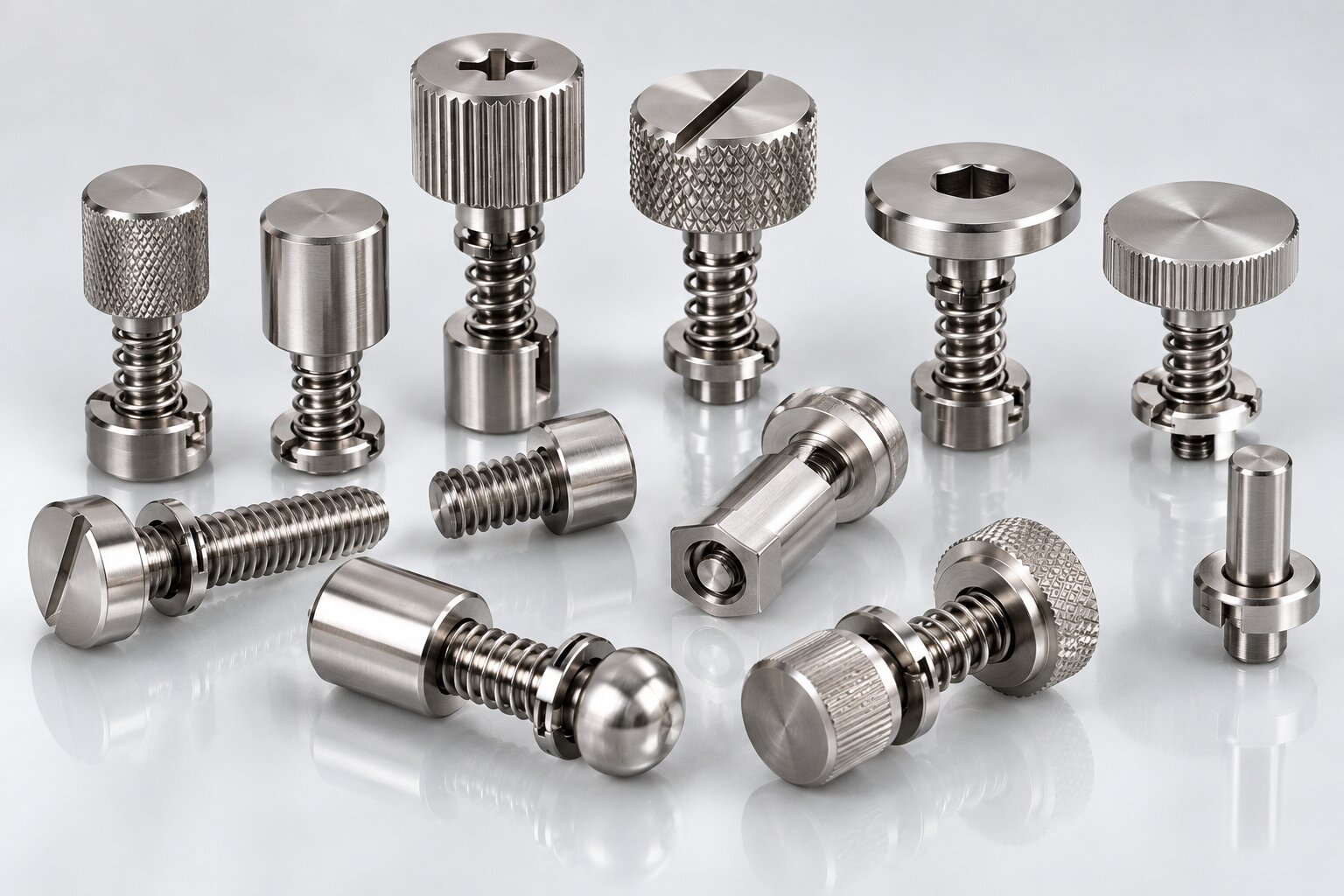
Captive Fasteners for Secure, Serviceable Assemblies
Captive Fasteners Manufacturer Overview
A captive fastener manufacturer supplies retained screws, bolts and panel-fastening components that stay attached to an assembly when disengaged. This design helps prevent loose hardware, supports repeated access and simplifies servicing.
Captive fasteners are available in multiple materials, head styles, retention methods, thread sizes and finishes. Buyers should select the configuration according to panel thickness, installation method, joint load, corrosion exposure, access requirements and the applicable drawing.
Materials & Captive Styles
Material options vary according to engineering and environmental requirements. Moreover, selection should consider the application, service conditions and the applicable technical specification.
Captive Fastener Types and Materials
Carbon Steel
For instance, these fasteners are commonly used for general engineering, fabrication and structural fastening applications.
Stainless Steel
Additionally, engineers choose this material when demanding fastening applications require higher mechanical performance.
Captive Screws
Likewise, engineers choose this material when corrosion resistance and durability matter.
Press-In Captive Fasteners
For specialized environments, engineers can choose nickel-based materials; therefore, the application requirements should guide the choice.
Flare-In & Swage Styles
Similarly, these alloys are suitable for selected applications where the application needs specific material properties.
Custom & Special Grades
Meanwhile, engineers can choose titanium for specialized applications where low density and corrosion resistance matter.
Captive Fastener Specifications
Dimensions, materials, grades and applicable standards can be selected according to the project drawing or purchase specification. Therefore, the final configuration should match the required service conditions.
For reference, ASTM fastener standards cover specifications and testing considerations for many types of fasteners.
Captive Fastener Specification Parameters
| Parameter | Available Options |
|---|---|
| Product Type | Captive Fasteners |
| Products | Captive screws, captive bolts, panel fasteners, press-in, flare-in and custom retained fasteners |
| Materials | Carbon steel, stainless steel and other specified materials |
| Thread Type | Metric coarse/fine and Unified UNC/UNF, as specified |
| Retention | Reduced shank, retaining feature, press-in, flare-in, swage or custom design |
| Head Styles | Socket, slotted, Phillips, hex, knurled, thumb and drawing-specific styles |
| Finish | Plain, passivated, zinc plated, phosphate coated, black oxide or other specified finish |
| Size | Metric and inch sizes according to drawing, mating thread and panel requirements |
| Custom Requirements | Custom dimensions, materials, panel range, retention geometry, finish, testing and documentation by agreement |
Captive Fastener Applications
Engineers use these fasteners across a wide range of mechanical and industrial applications where they need detachable bolted connections. For example, teams can specify them for machinery, fabrication, equipment and maintenance work.
Captive Fastener Application Areas
Captive Fastener Manufacturing Process
Generally, the manufacturing route depends on the selected material, dimensions, grade and specification. In general, production may include material preparation, forming or machining, threading, finishing and inspection. In addition, production teams can control each stage against the applicable drawing or purchase requirement.
Captive Fastener Manufacturing Stages
Material Verification
First, the production team verifies the specified material grade, wire or bar size and material condition.
Forming & Machining
Next, precision forming or machining creates the head, shank, retention feature and required captive-fastener geometry.
Threading & Finishing
Threads are rolled or cut as specified, followed by heat treatment, passivation or protective coating when required by the material and drawing.
Inspection
Finally, inspection verifies dimensions, threads, retention features, material records and specified documentation before dispatch.
Quality & Inspection
Inspection Areas
Consistent Product Requirements
Related Captive Fastener Range
Captive Fastener FAQs
What is a captive fastener?
A captive fastener is designed to remain attached to a panel or assembly when released from its mating thread. It helps control loose hardware and supports repeated access during maintenance.
Which captive fastener materials are available?
Common options include carbon steel and stainless steel, with material grades and finishes selected according to the captive design, corrosion exposure and application.
Can captive fasteners be customized?
Buyers can discuss custom dimensions and specifications according to the project, drawing or purchase specification. Moreover, buyers should confirm the final requirements before production.
Where are captive fasteners commonly used?
Engineers commonly use these fasteners in engineering, machinery, construction, fabrication, industrial equipment, structural and maintenance applications. For example, buyers should match the size and material to the service conditions.
How do I select the right captive fastener?
Selection should consider material, grade, diameter, length, thread configuration, operating environment, load requirements and the applicable standard. As a result, buyers should review project drawings and purchase specifications before ordering.
Looking for Captive Fasteners?
Share the captive style, material, finish, thread size, panel thickness, quantity and drawing with our team.