



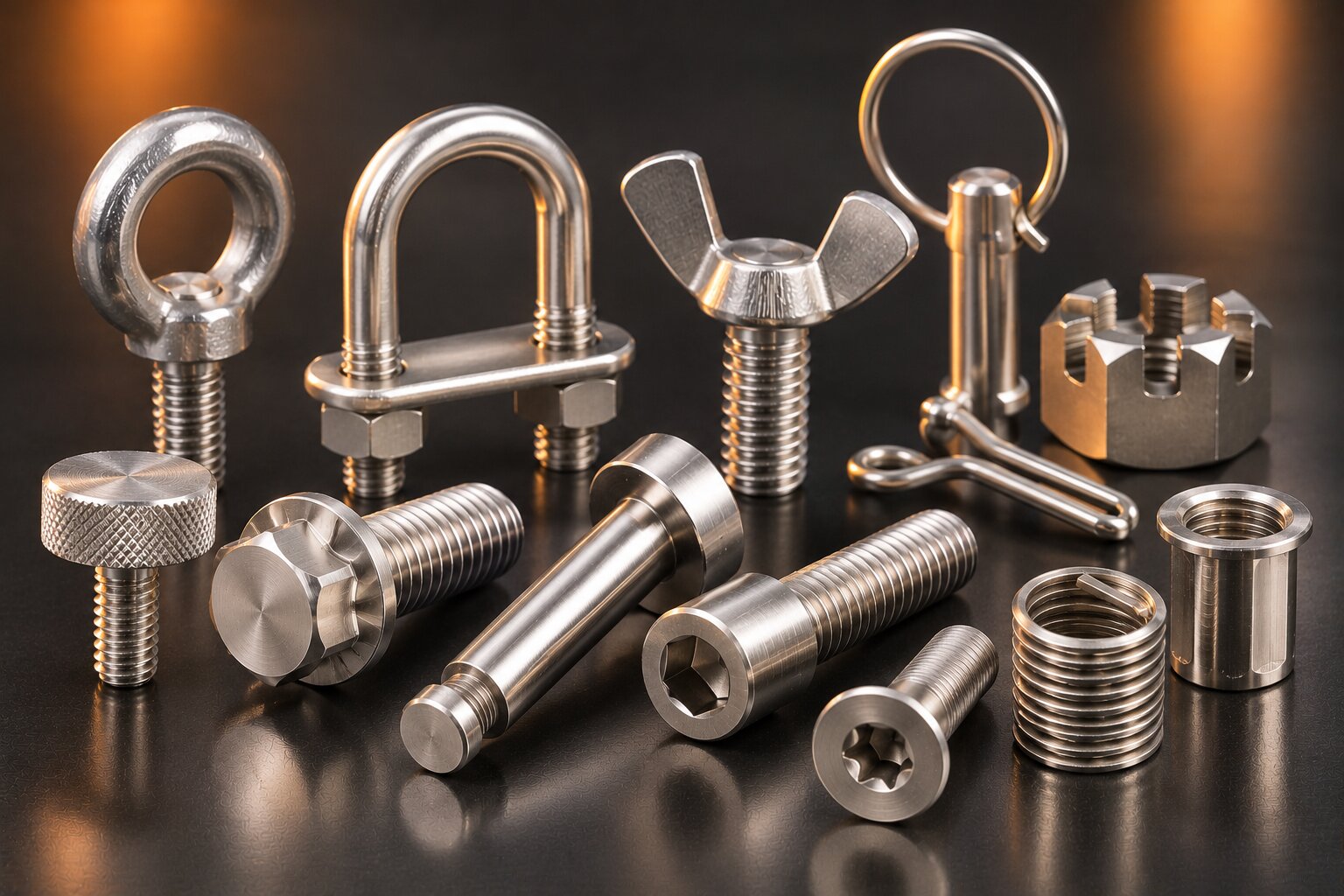
Special Fasteners for Custom Engineering Applications
What Are Special Fasteners?
For example, Special Fasteners are engineered components produced for applications that standard products cannot satisfy. In addition, they may feature custom dimensions, threads, head styles, materials, tolerances or surface treatments.
Therefore, selection depends on the joint design, load, operating environment and approved drawing. Buyers should confirm every critical dimension and specification before production.
Types of Special Fasteners
Different custom designs solve specific assembly challenges. Therefore, the correct type depends on the joint geometry, installation method, operating conditions and technical requirements.
Common Custom Fastener Options
Drawing-Based Fasteners
For example, manufacturers produce these components to customer drawings with defined dimensions, tolerances and features.
Custom Threaded Parts
In addition, non-standard thread forms, pitches and lengths support specialized mechanical assemblies.
Special Bolts & Studs
Meanwhile, custom heads, bodies, thread lengths and end configurations meet project-specific joint requirements.
Precision Machined Parts
Similarly, machined components provide controlled geometry, close tolerances and application-specific details.
Non-Standard Nuts
Furthermore, custom profiles, thread systems and locking features serve specialized equipment and assemblies.
Custom Washers & Spacers
Finally, special diameters, thicknesses and profiles help manage load, spacing and alignment requirements.
Special Fastener Materials & Grade Options
Material selection influences strength, corrosion resistance, temperature capability and compatibility. Consequently, engineers should choose the grade according to the service conditions and approved specification.
Common Material Options
Carbon Steel
For general applications, carbon steel offers practical strength and cost efficiency. Moreover, the grade and finish should match the specification.
Stainless Steel
Where corrosion matters, stainless steel provides durable performance. However, exposure, chemicals and temperature determine the suitable grade.
Alloy Steel
For higher mechanical requirements, alloy steel offers several grade options. Therefore, confirm the heat treatment and relevant standard.
Brass
For example, brass combines machinability with useful corrosion resistance in selected electrical and utility applications.
Monel
In addition, engineers may consider nickel-copper alloys for demanding environments after confirming service compatibility.
Special Alloys
For specialized service, buyers can request other alloys. Nevertheless, the project requirements must guide availability and suitability.
Special Fastener Specifications
Dimensions and mechanical properties vary by design, material and standard. Therefore, confirm every detail against the drawing or purchase specification before production.
Moreover, applicable requirements may include ASTM fastener standards, ASME, DIN, ISO or other project-specific specifications. Therefore, confirm the correct standard for the selected fastener type and material.
Key Specification Parameters
| Parameter | Details to Confirm |
|---|---|
| Product Type | Drawing-based fastener, custom threaded part, bolt, stud, nut, washer or spacer |
| Material | Carbon steel, alloy steel, stainless steel, brass or specified alloy |
| Diameter | Required nominal diameter as shown in the drawing or standard |
| Length | Required overall length and feature positions shown on the drawing |
| Thread Type | Metric or inch thread series, pitch, form and tolerance |
| Grade | Specified property class, material grade or mechanical requirement |
| Finish | Plain, coated, plated or other approved surface treatment |
| Standards | Applicable ASTM, ASME, DIN, ISO, IS or project-specific specification |
| Custom Requirements | Special dimensions, threads, configuration, inspection or documentation requirements |
Special Fastener Applications
Industries use custom components when standard hardware cannot meet the required geometry, material or performance. Moreover, each design should match the actual load, environment and assembly conditions.
Typical Use Areas
Special Fastener Manufacturing Process
Moreover, the production route depends on the approved drawing, material, dimensions and tolerances. In addition, manufacturing may include requirement review, material preparation, machining, threading, finishing and inspection.
Typical Production Stages
Requirement Review
First, review the drawing, dimensions, tolerances, material, grade, quantity and applicable standard.
Material Preparation
In addition, confirm the specified material and prepare the stock or sourced components for the required configuration.
Machining & Threading
Next, production teams create the required geometry and threads according to the approved tolerances.
Inspection
Finally, inspectors check dimensions, threads, finish and documentation before dispatch or acceptance.
Special Fastener Quality & Inspection
Inspection Areas
Fasteners Checked Against Requirements
Related Industrial Fastener Products
Special Fastener FAQs
What are Special Fasteners?
Specifically, Special Fasteners are custom or non-standard components designed around required dimensions, materials, threads and tolerances.
Can you manufacture from a drawing?
Yes. For example, buyers can provide an approved drawing that defines geometry, dimensions, tolerances, material and inspection requirements.
Which materials are available?
In addition, options can include carbon steel, alloy steel, stainless steel, brass, Monel and other specified alloys.
Can I specify a custom thread?
Yes. However, confirm the thread system, diameter, pitch, class, engagement length and tolerance on the drawing.
What details should an enquiry include?
Therefore, provide the drawing, material, dimensions, tolerances, thread, finish, quantity and inspection requirements.
How do you confirm product quality?
Finally, inspection can cover dimensions, threads, material, finish and documentation according to the agreed purchase requirements.
Looking for Custom Special Fasteners?
Therefore, share your drawing, material, dimensions, tolerances, thread, finish and quantity with our team.