


Stainless Steel Chemical Anchor Manufacturer Overview
Stainless Steel Chemical Anchor Systems
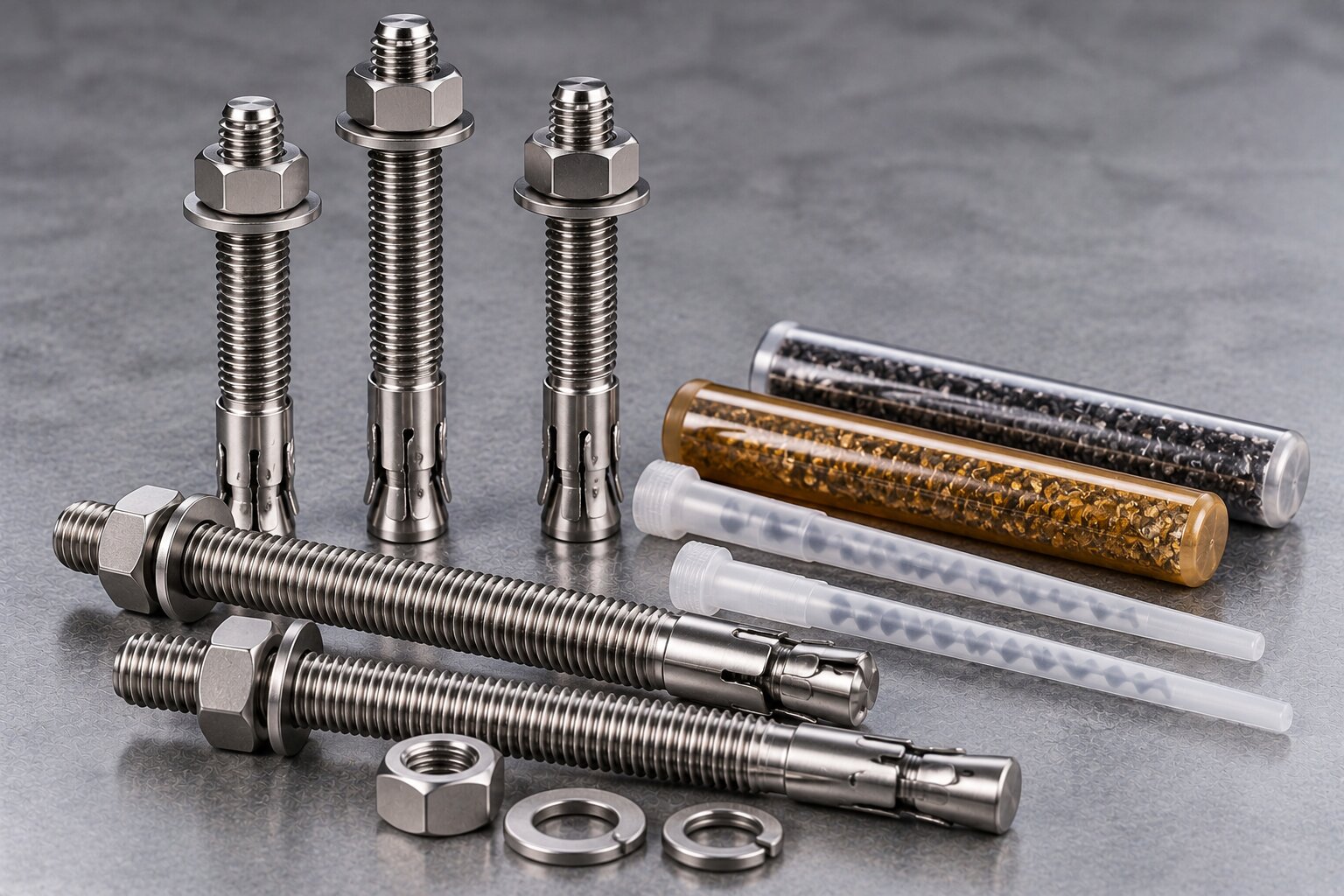
Stainless Steel Chemical Anchor systems combine a threaded stainless steel element with an approved resin or capsule. After curing, the bonded connection transfers load into the prepared concrete or masonry hole without expansion pressure.
In addition, buyers can select the rod diameter, embedment depth, stainless steel grade and resin system. Therefore, each assembly should match the base material, load, edge distance, environment and applicable approval.
Materials for Stainless Steel Chemical Anchors
Material options vary according to engineering and environmental requirements. Moreover, selection should consider the application, service conditions and the applicable technical specification.
Common Stainless Steel Chemical Anchor Options
Stainless Steel 304 Rods
For general construction, stainless steel 304 rods provide dependable corrosion resistance and mechanical performance.
Stainless Steel 316 Rods
Where marine or chemical exposure is expected, stainless steel 316 rods offer improved corrosion resistance.
Injection Resin Systems
For flexible installation, injection resin systems support different embedment depths and approved base materials.
Resin Capsule Systems
In addition, pre-measured resin capsules provide controlled resin quantity for compatible drilled holes and studs.
Tang & Tangless Styles
Meanwhile, complete sets can include threaded studs, nuts and washers matched to the specified connection.
Custom & Special Grades
Finally, buyers can request special diameters, lengths, thread forms, end details, grades and packaging.
Stainless Steel Chemical Anchor Specifications
Dimensions, materials, grades and applicable standards can be selected according to the project drawing or purchase specification. Therefore, the final configuration should match the required service conditions.
For European bonded-fastener assessment documents, refer to the EOTA EAD catalogue, including EAD 330499 for bonded fasteners.
Key Specification Parameters
| Parameter | Available Options |
|---|---|
| Product Type | Stainless steel bonded anchor systems |
| Steel Grades | Stainless steel 304, stainless steel 316 and specified corrosion-resistant grades |
| Bonding Systems | Injection resin, resin capsule and approved project-specific adhesive systems |
| Thread Sizes | Metric coarse and other specified threads in standard or custom diameters |
| Rod Length | Standard and custom lengths selected according to embedment and fixture thickness |
| Base Materials | Concrete, solid masonry and other materials covered by the selected system approval |
| Installation | Drill, clean, inject or insert resin, place the rod and observe the specified curing time |
| Supply | Threaded rods, studs, nuts, washers, capsules and project-specific kits |
| Inspection | Material grade, dimensions, threads, surface condition and specified documentation |
Stainless Steel Chemical Anchor Applications
Installers use bonded anchors for structural steelwork, railings, machinery, façades and retrofit connections. For example, suitable systems serve concrete foundations, bridges, industrial plants, masonry work and infrastructure projects.
Typical Use Areas
Stainless Steel Chemical Anchor Manufacturing Process
Generally, the production route depends on the stainless steel grade, rod diameter, thread and end detail. In practice, manufacturing includes material preparation, cutting, threading, finishing and inspection. In addition, teams control each stage against the drawing or purchase requirement.
Typical Production Stages
Raw Material Verification
First, the production team verifies the specified stainless steel grade, bar dimensions and incoming material condition.
Forming & Machining
Next, controlled cutting and machining produce the required rod length, end geometry and installation features.
Threading & Passivation
Afterward, threads are formed or machined to specification. Moreover, rods are cleaned and passivated where required.
Inspection
Finally, inspection verifies dimensions, thread fit, material grade, surface condition, marking and documentation.
Quality & Inspection
Inspection Areas
Consistent Product Requirements
Related Bundling Products
Stainless Steel Chemical Anchor FAQs
What is a stainless steel chemical anchor?
A stainless steel chemical anchor combines a corrosion-resistant threaded element with a resin bonding system. As a result, the cured bond transfers load into the prepared base material with minimal expansion pressure.
Which stainless steel chemical anchor styles are available?
Common options include injection-resin systems, resin capsules, threaded rods and complete stud sets in different stainless steel grades. However, availability depends on the diameter, length, resin and approval requirements.
Can stainless steel chemical anchors be customized?
Buyers can discuss custom rod diameters, lengths, threads, grades, end details and packaging according to the drawing or specification. Moreover, final requirements should be confirmed before production.
Where are stainless steel chemical anchors used?
Installers commonly use bonded systems in concrete and masonry for structural steel, railings, machinery, façades and retrofit work. For example, the selected system should match the base material and design load.
How do I select the right stainless steel chemical anchor?
Selection should consider steel grade, rod diameter, embedment depth, base material, load, temperature, moisture and approval. Therefore, buyers should review structural calculations and installation instructions before ordering.
Looking for Stainless Steel Chemical Anchors?
Finally, share the required steel grade, rod diameter, length, resin system, quantity and project specification with our team.