


Anchors for Secure Structural Fastening
What Are Anchors?
Anchors create secure connections between fixtures or structural components and a concrete or masonry base. In addition, they support permanent and removable installation requirements.
Therefore, selection depends on the base material, load, edge distance and installation method. Buyers should confirm the embedment depth and technical requirements before ordering.
Types of Anchors
Different designs suit concrete, masonry and other approved base materials. Therefore, the correct type depends on the load and installation requirements.
Common Anchor Options
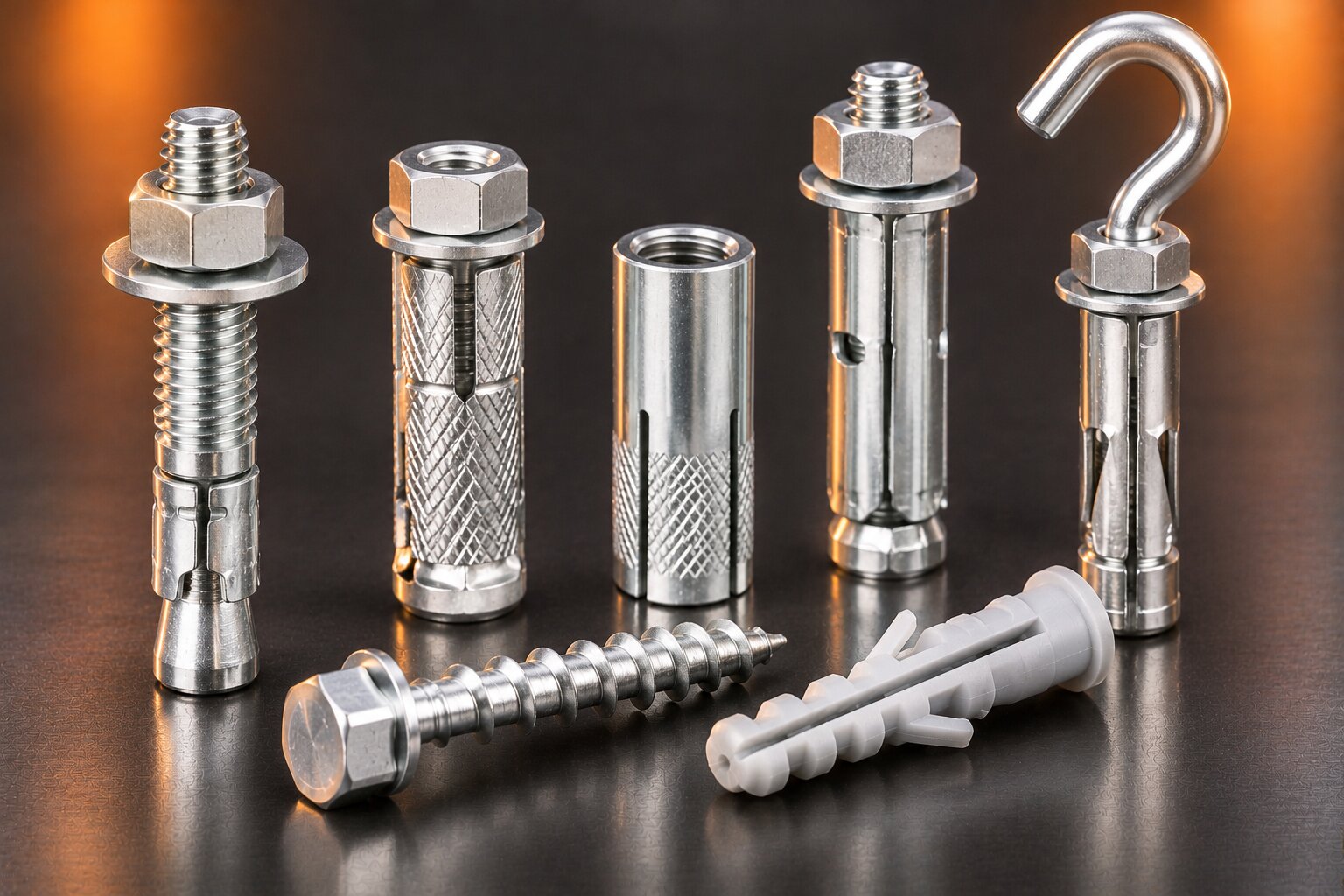
Wedge Anchors
For example, wedge designs provide mechanical expansion in suitable concrete.
Sleeve Anchors
In addition, sleeve designs support compatible concrete and masonry installations.
Drop-In Anchors
Meanwhile, internally threaded drop-in types create flush mounting points.
Chemical Anchors
Similarly, resin systems secure threaded rods in prepared holes.
Anchor Bolts
Furthermore, anchor bolts connect base plates and equipment to foundations.
Custom Anchors
Finally, custom designs can meet unusual loads, dimensions or mounting conditions.
Anchor Materials & Options
Material selection influences strength, corrosion resistance and compatibility. Consequently, engineers should match the anchor material to the load and service conditions.
Common Material Options
Stainless Steel
For example, stainless steel provides strength, durability and useful corrosion resistance.
Carbon Steel
In addition, coated carbon steel offers practical performance for general installations.
Alloy Steel
Meanwhile, alloy steel supports selected high-strength fastening requirements.
Brass
For suitable light-duty applications, brass offers useful corrosion resistance.
Mechanical Expansion
Furthermore, expansion mechanisms create holding force inside prepared holes.
Resin Systems
Finally, approved resin systems support chemical anchoring applications.
Anchor Specifications
Dimensions vary by anchor type, diameter, length and embedment depth. Therefore, confirm every detail against the drawing or purchase specification.
Moreover, applicable requirements may include ISO standards, DIN, ANSI or project-specific specifications. Therefore, confirm the correct standard before ordering.
Key Specification Parameters
| Parameter | Details to Confirm |
|---|---|
| Anchor Type | Wedge, sleeve, drop-in, chemical, anchor bolt or custom design |
| Material | Stainless steel, carbon steel, alloy steel, brass or specified material |
| Size | Required diameter, overall length and thread dimensions |
| Embedment | Specified effective embedment depth and hole depth |
| Base Material | Concrete, masonry or other approved substrate |
| Load | Required tensile, shear and service load |
| Finish | Plain, passivated, plated, coated or approved treatment |
| Standards | Applicable ASTM, DIN, ISO or project-specific specification |
| Installation | Hole diameter, cleaning, torque and curing requirements |
Anchor Applications
Industries use anchoring products to secure equipment, fixtures and structural components. Moreover, the selected design should match the load, base material and installation method.
Typical Use Areas
Anchor Manufacturing Process
Moreover, the production route depends on the anchor design, material, dimensions and tolerances. In addition, manufacturing may include forming, machining, threading, finishing and inspection.
Typical Production Stages
Requirement Review
First, review the product type, diameter, material, mounting method and quantity.
Material Preparation
In addition, confirm the specified material and prepare strip, wire or polymer stock.
Forming & Finishing
Next, production teams create the required shape, mounting features and finish.
Inspection
Finally, inspectors check dimensions, threads, finish and documentation before dispatch or acceptance.
Anchor Quality & Inspection
Inspection Areas
Products Checked Against Requirements
Related Industrial Fastener Products
Anchor FAQs
What are Anchors?
Specifically, Anchors secure fixtures, equipment or structural components to a base material.
How do I select the correct size?
For example, match the diameter and embedment depth to the load and base material.
Which materials are available?
In addition, options can include stainless steel, carbon steel, aluminium, nylon and protective linings.
Can I request a chemical anchor?
Yes. However, confirm the base material, hole condition, load and curing requirements.
What details should an enquiry include?
Therefore, provide the anchor type, diameter, length, material, load and quantity.
Can you supply custom configurations?
Finally, buyers can share a drawing for custom dimensions, threads or materials.
Looking for the Right Anchors?
Therefore, share the anchor type, diameter, length, material, base material and quantity with our team.