


Hastelloy Castle Nut for Corrosive Environments
Hastelloy Castle Nut Overview
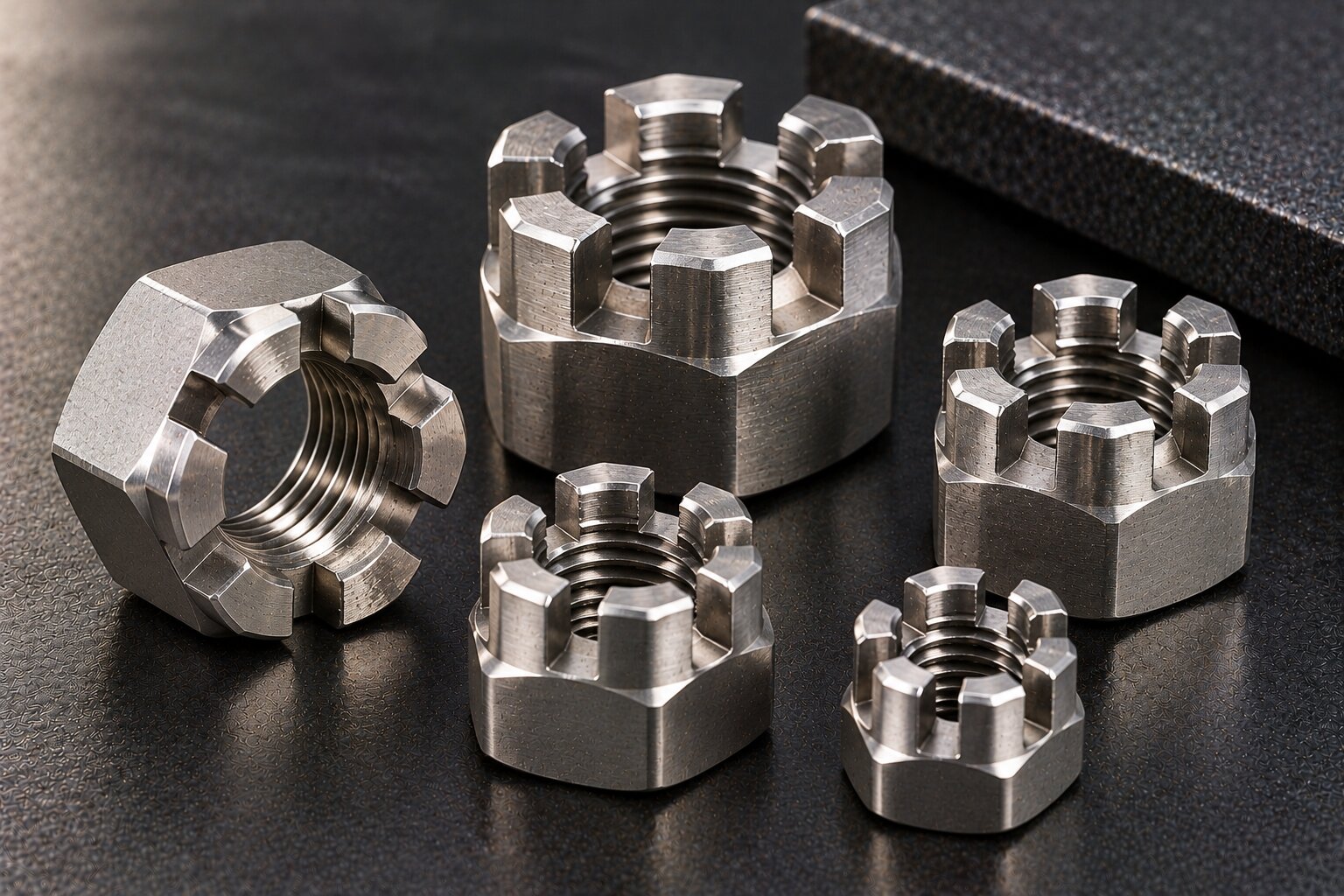
Moreover, this castle nut combines internal threads with castellated slots for alignment with a drilled bolt and cotter pin. As a result, the mechanical locking arrangement helps prevent rotation in vibration-prone or safety-critical joints.
In addition, buyers can specify the thread size, pitch, across-flats dimension, nut height, slot geometry, Hastelloy grade and tolerances. Therefore, each nut can be matched to the fastener, locking pin, joint load, temperature and chemical environment.
Hastelloy Grades & Castle Nut Configurations
In particular, material options vary according to engineering and environmental requirements. Moreover, selection should consider the application, service conditions and the applicable technical specification.
Common Hastelloy Castle Nut Options
Hastelloy C-276
For example, Hastelloy C-276 offers broad chemical resistance in many oxidizing and reducing environments.
Hastelloy C-22
Additionally, Hastelloy C-22 provides a high-performance option where oxidizing media and localized corrosion are concerns.
Standard Thread Forms
For instance, standard and custom metric or inch threads can be produced to match the mating bolt and required fit class.
Metric & Inch Threads
In addition, coarse, fine and drawing-defined thread pitches can be supplied for compatible fasteners and service requirements.
Castellated Slot Options
Meanwhile, slot width, depth and quantity can be controlled for cotter-pin alignment and the required locking arrangement.
Custom & Special Grades
Finally, buyers can request special threads, across-flats dimensions, heights, slot geometries, grades, finishes and packaging.
Hastelloy Castle Nut Specifications
Moreover, dimensions, materials, grades and applicable standards can be selected according to the project drawing or purchase specification. Therefore, the final configuration should match the required service conditions.
For official Hastelloy C-276 composition, product forms and corrosion information, refer to the Haynes International C-276 alloy guide.
Key Specification Parameters
| Parameter | Available Options |
|---|---|
| Product Type | Castellated nut for cotter-pin locking |
| Material Grades | Hastelloy C-276, C-22, B-series and specified nickel-based alloys |
| Dimensions | Metric and inch threads, across-flats dimension, height and slot geometry |
| Standards | DIN, ISO, ASME or custom drawing requirements, as applicable |
| Tolerances | Specified thread, across-flats, height, slot width and slot depth tolerances |
| Locking Feature | Castellated slots for alignment with a drilled bolt and cotter pin |
| Surface Condition | Cleaned, solution-treated condition as supplied, or project-specified finish |
| Supply | Individual pieces, bulk quantities, kits or project-specific packaging |
| Inspection | Material verification, thread gauging, dimensions, slot geometry and documentation |
Hastelloy Castle Nut Applications
Consequently, engineers specify this castle nut for chemical plants, marine systems, oil and gas equipment, valve assemblies and rotating machinery. For example, the cotter-pin arrangement provides visible positive locking in corrosive or vibration-prone service.
Typical Use Areas
Hastelloy Castle Nut Manufacturing
Generally, the production route depends on the Hastelloy grade, thread size, across-flats dimension, nut height and slot geometry. In practice, manufacturing includes material verification, forging or machining, threading, slot milling, deburring, cleaning and inspection. In addition, teams control each stage against the drawing or purchase requirement.
Typical Production Stages
Raw Material Verification
First, the production team verifies the specified Hastelloy grade, bar or forging dimensions, heat number and incoming material condition.
Forming & Machining
Next, controlled machining and threading produce the required across-flats dimension, height, thread size and pitch.
Deburring & Finishing
Afterward, castellated slots are machined before edges are deburred and surfaces are cleaned or finished as required.
Inspection
Finally, inspection verifies thread fit, across-flats dimension, height, slot geometry, material identity, surface condition and documentation.
Quality & Inspection
Castle Nut Inspection Areas
Consistent Product Requirements
Related Castle Nut
Product FAQs
What is a Hastelloy castle nut?
In particular, a Hastelloy castle nut uses castellated slots that align with a drilled bolt for cotter-pin locking. In addition, its nickel-based alloy resists corrosive environments.
Which grades are available?
For instance, common options include C-276, C-22 and other specified Hastelloy grades. However, availability depends on thread size, pitch, nut height, slot geometry, grade and quantity.
Can these nuts be customized?
For example, buyers can discuss custom threads, across-flats dimensions, heights, slot widths, slot depths, grades and packaging. Moreover, final requirements should be confirmed before production.
Where are castle nuts used?
Consequently, engineers commonly specify this nut for chemical plants, marine systems, oil and gas equipment, valves and rotating machinery. For example, the selected grade and locking arrangement should match the environment, temperature and load.
How do I select the correct nut?
First, selection should consider Hastelloy grade, thread size, pitch, nut height, slot geometry, cotter-pin size, load, temperature and chemicals. Therefore, buyers should review project calculations and mating components before ordering.
Looking for Hastelloy Castle Nut?
Finally, share the required Hastelloy grade, thread size, pitch, nut height, slot geometry, quantity and project specification with our team.