


Select Language
Loading languages...
Industrial Double-Ended Fastening Solutions

Double End Stud Manufacturer & Supplier

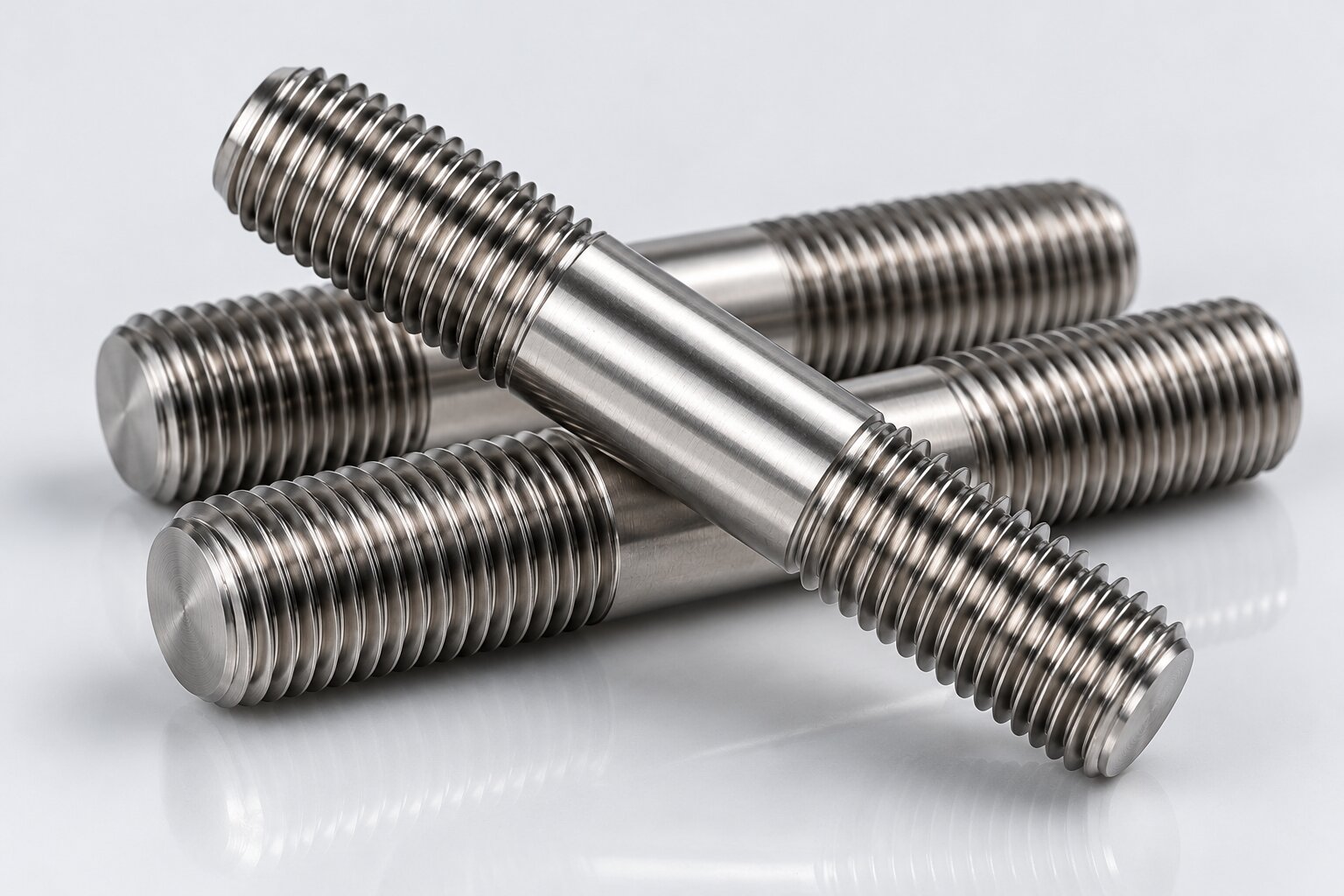
Double End Stud products provide secure fastening with threads at both ends and a plain centre shank for structural, machinery and industrial assemblies.

Double End Stud
Product
Double-Ended Stud Fastener
Material
Steel, Stainless & Special Alloys
Options
End Threads, Shanks & Lengths
Enquiry
Custom Requirements Accepted

Double End Stud Products for Industrial Assemblies

Product Overview

Double End Stud products provide adjustable fastening with threads at both ends and a plain centre shank. Available materials include carbon steel, stainless steel, nickel alloys and titanium for varied loads and environments.

In addition, buyers can specify the stud diameter, overall length, thread lengths, centre-shank length, material grade, finish and thread form. Therefore, each fastener should match the load, mating components and service environment.

Materials, Grades & Stud Configurations

Material options vary according to engineering and environmental requirements. Moreover, selection should consider the application, service conditions and the applicable technical specification.

Common Material and Thread Options

01

Carbon & Alloy Steel

For structural and mechanical assemblies, carbon and alloy steels provide economical strength with optional heat treatment and protective finishes.

02

Stainless & Special Alloys

Where corrosion, temperature or weight matters, stainless steel, nickel alloys and titanium provide application-specific performance.

03

Equal Thread Lengths

For balanced assemblies, both threaded ends can have equal engagement lengths around the plain centre shank.

04

Unequal Thread Lengths

In addition, each end can have a different thread length when the tapped hole and nut-side engagement requirements differ.

05

Custom Centre Shanks

Meanwhile, custom ends can include flats, reduced sections, holes or drawing-defined features.

06

Custom & Special Grades

Finally, buyers can request special diameters, lengths, pitches, thread classes, grades and packaging.

Double End Stud Specifications

Dimensions, materials, grades and applicable standards can be selected according to the project drawing or purchase specification. Therefore, the final configuration should match the required service conditions.

For an overview of recognized requirements for externally threaded fasteners, refer to the ASTM fastener standards catalogue.

Key Specification Parameters

Parameter Available Options
Product TypeDouble-ended studs with two threaded ends and a plain centre shank
Material GradesCarbon steel, stainless steel, nickel alloys, titanium and project-specified materials
ConfigurationsEqual or unequal end threads, plain-centre shank and drawing-specific details
Thread TypesMetric coarse/fine, UNC, UNF and specified thread forms
DimensionsStandard and custom diameters, lengths, pitches and thread engagement
EndsChamfered, pointed, flat, reduced, drilled or drawing-defined end details
FinishesPlain, zinc plated, galvanized, passivated, black oxide or project-specified finish
SupplyIndividual studs, matched nuts and washers, or project-specific assemblies
InspectionMaterial verification, dimensions, thread fit, straightness and documentation

Double End Stud Applications

Engineers specify these studs for structural frames, machinery, marine equipment, piping supports and process plants. For example, suitable materials connect flanges, housings, equipment bases and tension assemblies.

Typical Use Areas

01 Structural Construction
02 Heavy Machinery
03 Marine Equipment
04 Piping Supports
05 Process Equipment
06 General Fabrication
07 Flanged Connections
08 Industrial Assemblies

Double End Stud Manufacturing Process

Generally, the production route depends on the selected material grade, condition, stud diameter, overall length, end-thread lengths and centre-shank details. In practice, manufacturing includes material verification, cutting, machining or thread rolling, finishing and inspection.

Typical Production Stages

MATERIAL 01

Raw Material Verification

First, the production team verifies the specified material grade, bar dimensions, heat number and incoming material condition.

FORMING 02

Forming & Machining

Next, controlled cutting and machining produce the required length, end geometry and assembly features.

LOCKING 03

Threading & Passivation

Afterward, threads are rolled or machined to the specified form and class. Moreover, rods are cleaned and finished as required.

QUALITY 04

Inspection

Finally, inspection verifies dimensions, thread fit, straightness, material identity, surface condition and documentation.

Quality & Inspection

Inspection Areas

Inspection Focus

Consistent Product Requirements

Dimensional Verification
Thread Inspection
Raw Material Verification
Visual Inspection
Surface Finish Checking
Specification Review

Related Bundling Products

Double End Stud FAQs

What is this double-ended fastener?

A double end stud has threads at both ends and a plain centre section. It joins tapped components, nuts or flanged assemblies while allowing the material, dimensions and thread engagement to match the application.

Which end-thread configurations are available?

Common options include equal-thread, unequal-thread and custom studs in carbon steel, stainless steel, nickel alloys and titanium. However, availability depends on the diameter, length, thread form, finish and quantity.

Can these studs be customized?

Buyers can discuss custom diameters, lengths, thread forms, end details, grades and packaging according to the specification. Moreover, final requirements should be confirmed before production.

Where are double-ended studs used?

Engineers commonly specify these studs for chemical plants, marine systems, oil and gas equipment, heat exchangers and pollution-control systems. For example, the selected grade should match the media, temperature and load.

How do I select the correct stud?

Selection should consider material grade, finish, diameter, length, thread form, load, temperature and mating components. Therefore, buyers should review project calculations and material requirements before ordering.

Looking for Double End Stud Products?

Finally, share the required material grade, finish, diameter, length, thread form, quantity and project specification with our team.

Send Your Requirement
Cable Management & Bundling Solutions

Cable Tie Manufacturer & Supplier

Cable Tie Manufacturer supplying reliable products for bundling wires, organizing cable routes and securing components in electrical and industrial installations.

Cable Tie Manufacturer
Product
Cable Management
Material
Nylon Cable Ties, 316 & More
Options
Threads, Lengths & Tie Styles
Enquiry
Custom Requirements Accepted

Secure Bundling & Cable Management Solutions

Product Overview

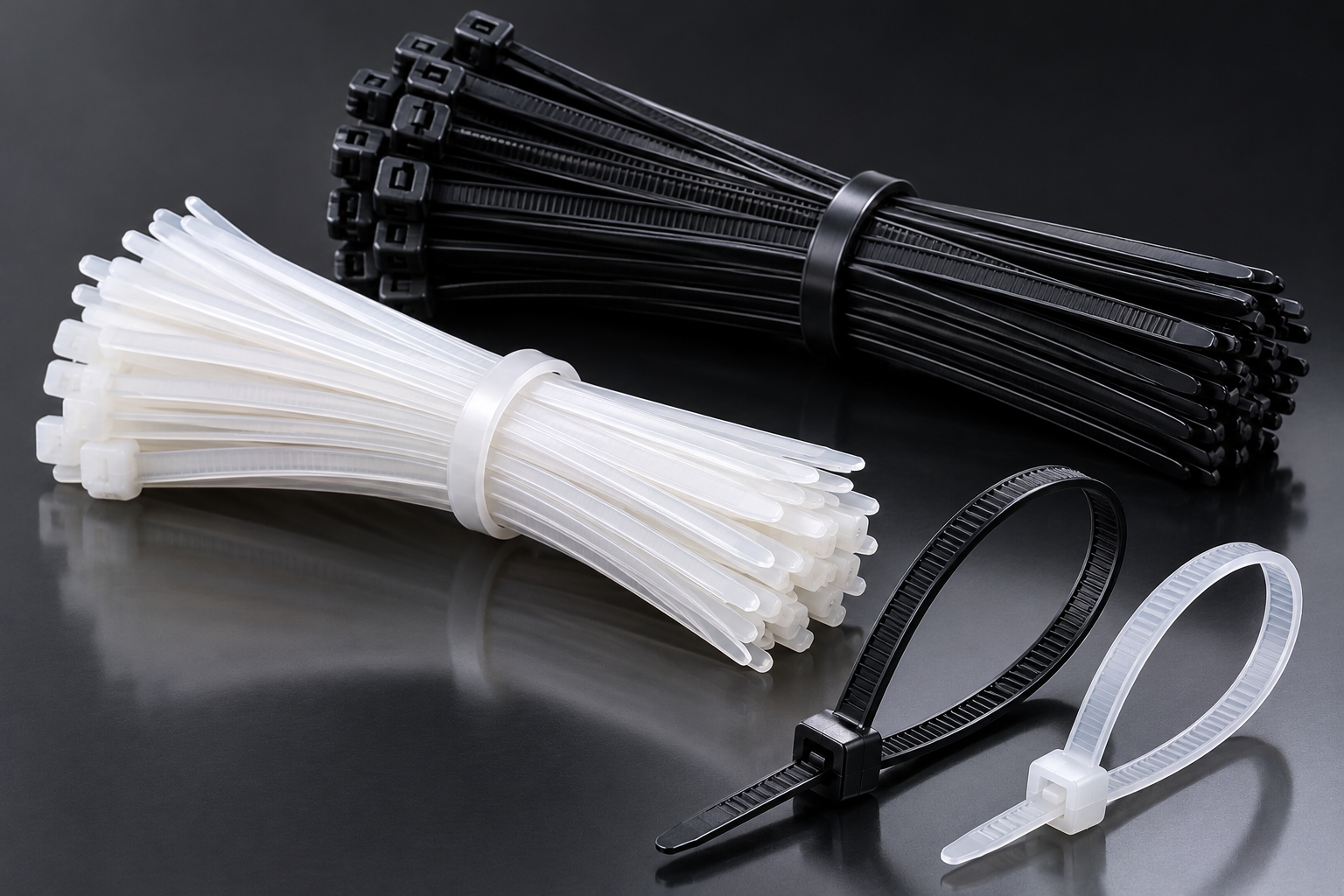
Specifically, cable tie products use a strap and locking mechanism to hold wires, hoses or components securely. However, buyers can select lightweight polymer ties or high-strength metal designs.

In addition, buyers can select different lengths, widths, materials, locking styles and tensile strengths. Therefore, each tie should match the bundle diameter, installation environment, temperature range and required holding strength.

Moreover, correct sizing helps protect cables and maintain an organized installation. Therefore, confirm the bundle diameter and required tensile strength. Finally, match the material to the temperature, moisture and chemical exposure.

Materials & Styles for Cable Ties

Moreover, material options vary according to engineering and environmental requirements. Moreover, selection should consider the application, service conditions and the applicable technical specification.

Common Cable Tie Options

01

Nylon Cable Ties

For example, nylon options provide flexible and lightweight fastening for electrical wiring, equipment assembly and cable organization.

02

Stainless Steel Cable Ties

In contrast, stainless steel options provide higher strength for industrial, outdoor and mechanically demanding installations.

03

UV-Resistant Ties

Meanwhile, UV-resistant polymer grades offer improved durability for outdoor cable-management work.

04

Heat-Resistant Ties

Additionally, heat-resistant materials extend the available service range. However, the specified temperature rating must be confirmed.

05

Tang & Tangless Styles

In addition, releasable and marker styles support temporary fastening, maintenance access and clear cable identification.

06

Custom & Special Grades

Finally, buyers can request special dimensions, colours, labels, coatings and packaging to suit project-specific requirements.

Specifications for Cable Tie Products

Therefore, dimensions, materials, grades and applicable standards can be selected according to the project drawing or purchase specification. Therefore, the final configuration should match the required service conditions.

For example, for international electrical and electronic standards information, visit the IEC information for electrical installations.

Key Specification Parameters

Parameter Available Options
Product TypeCable ties
MaterialsNylon 66, UV-stabilized nylon, stainless steel 304, stainless steel 316 and specified grades
StylesSelf-locking, ball-lock, releasable, marker, coated, uncoated and custom ties
SizesMultiple lengths and widths selected according to bundle diameter and tensile requirement
Colours & FinishesNatural, black, coloured polymer, uncoated metal and specified coated finishes
Operating ConditionsIndoor, outdoor, marine, chemical, elevated-temperature and industrial service
InstallationManual fitting or compatible tensioning and cutting tools
PackagingStandard packs, bulk quantities and project-specific packaging
InspectionDimensions, locking performance, tensile strength, material and surface condition

Industrial Applications for Cable Ties

Consequently, installers use these products to bundle wiring, route cables and secure hoses or components. For example, suitable options serve electrical panels, vehicles, machinery, telecommunications, construction, marine equipment and maintenance work.

Common Use Areas

01 Engineering & Machinery
02 Construction & Fabrication
03 Industrial Equipment
04 Structural Applications
05 Automotive Applications
06 General Manufacturing
07 Process Equipment
08 Maintenance & Repair

Manufacturing Process for Cable Ties

Generally, the manufacturing route depends on the selected material, dimensions and locking design. In addition, production may include raw-material preparation, forming, locking-feature production, finishing and inspection. In addition, production teams control each stage against the applicable drawing or purchase requirement.

Production Stages

MATERIAL 01

Raw Material Verification

First, the production team verifies the specified polymer or stainless steel grade, material condition and incoming dimensions.

FORMING 02

Forming & Machining

Next, injection moulding forms polymer products, while controlled strip forming and cutting produce stainless steel versions.

LOCKING 03

Threading & Passivation

Next, the locking head or retention feature is completed. Moreover, coated products receive the specified protective finish.

QUALITY 04

Inspection

Finally, inspection verifies length, width, locking performance, tensile strength, material condition and specified documentation.

Quality & Inspection

Inspection Areas

Inspection Focus

Consistent Product Requirements

Dimensional Verification
Thread Inspection
Raw Material Verification
Visual Inspection
Surface Finish Checking
Specification Review

Related Bundling Products

Frequently Asked Questions About Cable Ties

What is a cable tie?

Specifically, a cable tie is a fastening strap with an integrated locking feature. As a result, it can tighten around wires, hoses or components to create an organized, secure bundle.

Additionally, which cable tie styles are available?

For example, common options include nylon, stainless steel, self-locking, ball-lock, releasable, UV-resistant, heat-resistant and marker ties. However, availability depends on the required dimensions, material and quantity.

Can buyers request customized cable ties?

Moreover, buyers can discuss custom materials, lengths, widths, colours, coatings and packaging according to the project, drawing or purchase specification. Therefore, buyers should confirm the final requirements before production.

Where are cable ties commonly used?

Furthermore, installers commonly use these ties in electrical work, machinery, automotive wiring, marine equipment, telecommunications, fabrication, industrial equipment, structural and maintenance applications. For example, buyers should match the size and material to the service conditions.

Finally, how do I select the right cable tie?

Therefore, selection should consider material, length, width, bundle diameter, tensile strength, temperature, operating environment, load requirements and the applicable standard. As a result, buyers should review project drawings and purchase specifications before ordering.

Moreover, accurate sizing supports secure bundling without damaging cables. Therefore, verify the bundle diameter before selecting the product.

Need Cable Tie Products?

Finally, share the required material, length, width, tensile strength, quantity and service conditions with our team.

Send Your Requirement

Contact Us

ADDRESS
Ground Floor 12-B,
91/101 Khemraj Bhavan,
7th Khetwadi Lane,
Mumbai – 400004

Mstar Enterprises

Trusted Partner For Industrial Solutions & Engineering Supplies